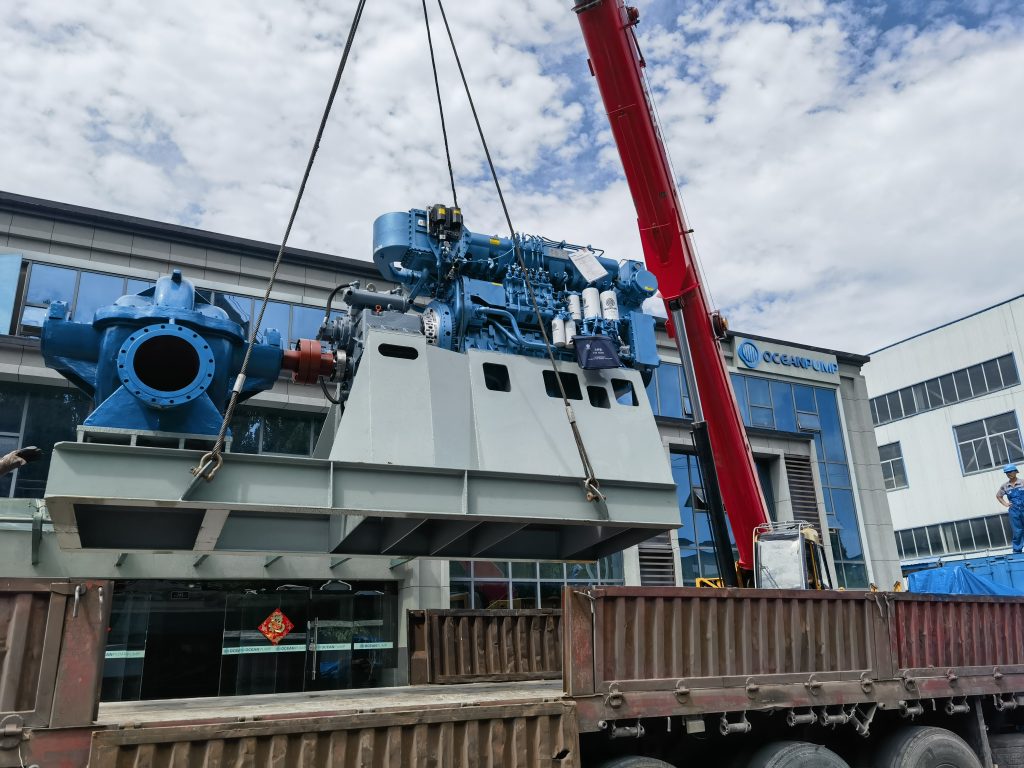
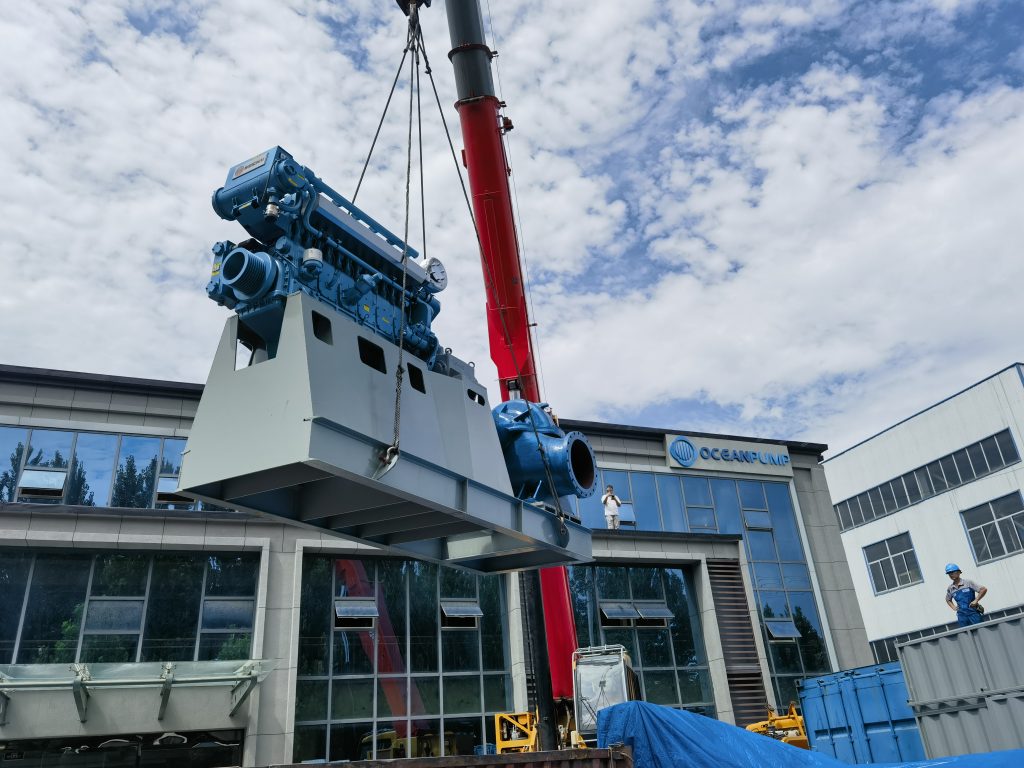
1,Meta Description: Horizontal split case pumps (double suction split case pumps) feature horizontal split casing, big flow capacity and easy maintenance. Check installation steps, common faults and troubleshooting for municipal and industrial water projects.
Horizontal split case pump, also widely known as double suction split case pump, is a mature single-stage double suction centrifugal pump adopted widely in municipal water supply, power plant circulating water, flood drainage and industrial water delivery systems. Many project owners prefer horizontal split case pumps over other centrifugal pumps because of its balanced axial force, high hydraulic efficiency and easy maintenance without removing inlet and outlet pipelines.
This article focuses on installation specifications, core benefits, typical working limits and common fault troubleshooting of horizontal split case pumps. It is a practical guide for engineering contractors, on-site operators and procurement engineers.
2. Introduction to Horizontal Split Case Pump
2.1 Definition and Main Features
The horizontal split case pump gets its name because the pump casing is horizontally divided into upper cover and lower body along the center line. The double suction impeller sucks water from both sides. The symmetrical flow design offsets most axial thrust, so the bearing assembly bears much less load and runs with low vibration and noise.
This pump is mainly used to transport clean water and liquids with similar physical properties to water, medium temperature generally ≤80℃. Customized high-temperature versions can handle liquid up to 120℃ for special industrial circulation systems. The flow range can reach up to tens of thousands cubic meters per hour, head covers 10m ~ 120m.
2.2 Main Categories
2.2.1 Standard Horizontal Split Case Pump: For normal temperature clean water, used in water plants, cooling circulation and irrigation projects. 2.2.2 High Temperature Split Case Pump: Special material and sealing design, suitable for hot water circulation in power and chemical industries. 2.2.3 Stainless Steel Split Case Pump: SS304 / SS316 wet parts, applied for slightly corrosive water and drinking water supply.
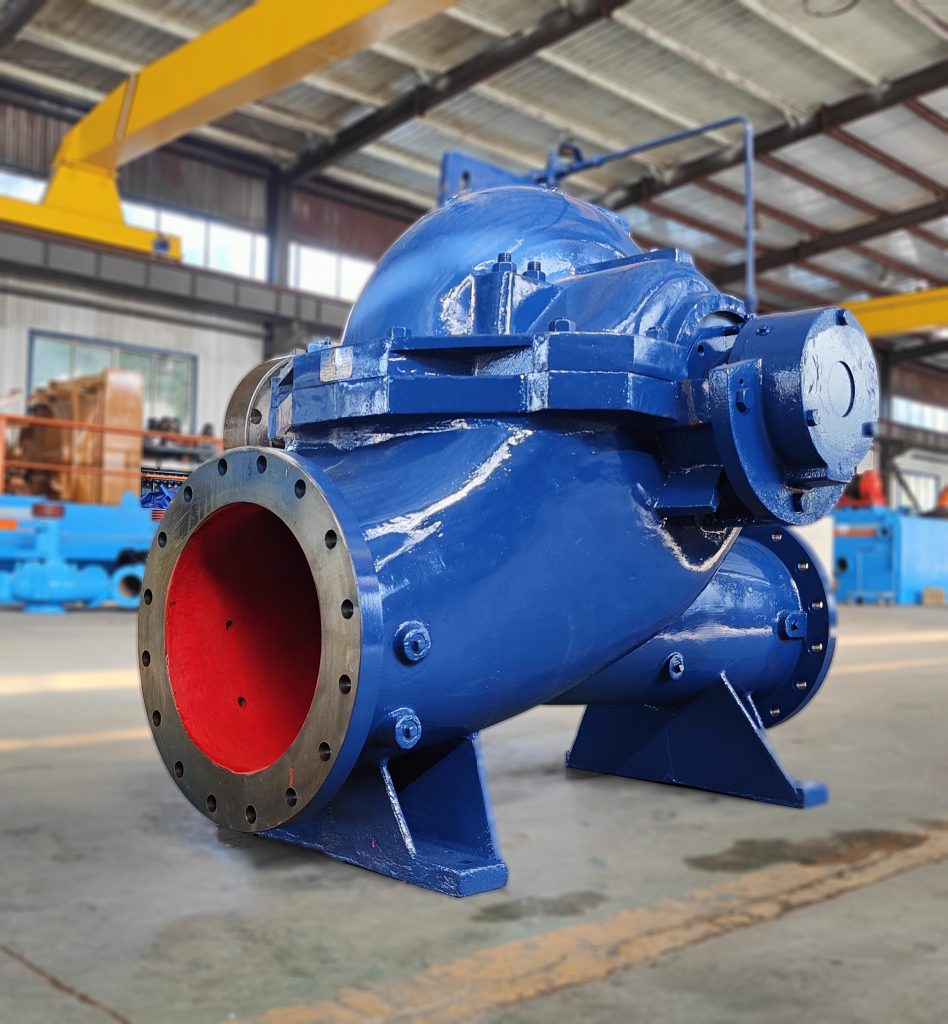

3. Core Advantages of Horizontal Split Case Pump
Balanced axial force: Double suction impeller eliminates most axial thrust, bearing service life is greatly extended, vibration and noise are kept low during continuous running.
Simple maintenance: No need to disconnect inlet & outlet pipelines. Just remove bolts and lift the upper pump cover, operators can directly inspect impeller, shaft seal and wear rings, cutting maintenance time greatly.
High hydraulic efficiency: Optimized hydraulic model reduces energy loss, saves electricity cost for long-time continuous operation.
Great anti-cavitation performance: Double side inlet reduces inlet flow velocity, good tolerance for low suction pressure and changing water level.
4. Standard Installation Steps
Step 1 Foundation Preparation
Concrete foundation must be solid and flat, reserved bolt holes for anchor bolts. The foundation weight should be at least 1.5 times the total weight of pump and motor to absorb vibration. Clean up all debris and oil on the foundation surface before placement.
Step 2 Placement and Alignment
Put the pump unit on the foundation, install anchor bolts but do not fully tighten. Use level gauge to check the horizontal level of pump body. Fine tune the pump and motor to make the coupling coaxial. Misalignment will cause vibration, bearing heating and shaft breakage in serious cases.
Step3 Pipeline Connection
Support suction and discharge pipelines independently with pipe brackets. Never let the pipeline weight press on the pump casing, extra stress will cause pump body deformation and seal leakage. Install valves, strainer and expansion joint as required by the system. The suction pipeline must be free of air pockets to avoid cavitation.
Step4 Lubrication and Commissioning
Add qualified lubricating oil or grease into bearing box. Check rotation direction before coupling connection. Fill pump body fully with water and exhaust air completely. Do not test run the pump dry. After no-load inspection, carry out load commissioning step by step, record vibration, temperature and pressure data.
5. Application Scenarios
- Municipal waterworks raw water lifting and water supply booster
- Thermal power plant, steel plant and chemical plant circulating cooling water
- Urban flood control pumping station and large farmland irrigation
- Building fire water supply and long-distance water transfer projects
- Drinking water delivery with stainless steel version
6. Common Faults and Troubleshooting
Fault 1: Pump cannot deliver water after startup
Causes: Air inside pump or suction pipeline; suction pipeline leakage; wrong rotation direction; blocked filter. Solutions: Refill water and exhaust air; check and repair pipeline leakage; adjust motor wiring to correct rotation; clean the strainer.
Fault 2: Insufficient flow or insufficient head
Causes: Impeller or wear ring worn; serious cavitation; pipeline resistance higher than design; speed lower than rated value. Solutions: Replace worn impeller and wear ring; improve suction condition to avoid cavitation; check pipeline for blockage; check motor speed and power supply.
Fault3 Severe vibration and noise
Causes: Coupling misalignment; foundation loose; impeller fouling or unbalanced; bearing damage; cavitation. Solutions: Realign coupling; fasten foundation bolts; clean impeller and do dynamic balance; replace damaged bearing; eliminate cavitation source.
Fault4 Bearing overheating
Causes: Too much or insufficient lubricant; lubricant deteriorated; misalignment; axial thrust abnormal. Solutions: Adjust oil level, replace new lubricating oil; re-align coupling; inspect wear ring and impeller.
Fault5 Shaft seal leakage too much
Causes: Packing worn; mechanical seal damaged; shaft surface scratched. Solutions: Replace packing or mechanical seal; repair or replace pump shaft.
7. Operation & Daily Maintenance Notes
Check bearing temperature, vibration and seal leakage every shift. Monitor outlet pressure and flow to make sure running within rated working range. Do not run the pump below minimum flow for a long time. Regularly clean pipeline and strainer. For long time shutdown, drain all liquid inside pump body to prevent rust and freezing damage. Carry out regular disassembly inspection according to operation hours.
8. Conclusion
Horizontal split case pumps remain the first option for large-volume water transportation systems because of high efficiency, stable operation and convenient maintenance. Whether for municipal water supply, power plant cooling or flood control projects, horizontal split case pumps can provide reliable continuous water delivery.
Taian Ocean Pump Industry supplies full range horizontal split case pumps, including cast iron and stainless steel models. We provide technical support, site installation guidance and after-sales service. Contact us to get professional pump selection solution for your water delivery project.