
What Is a Gravel Pump?
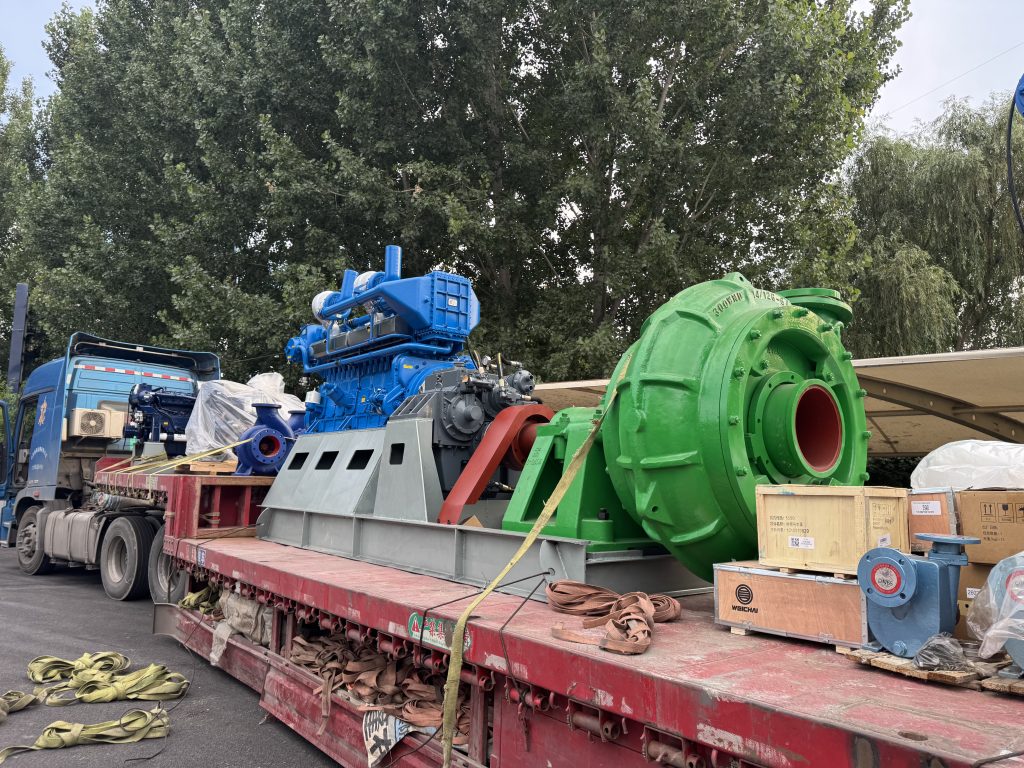
A gravel pump is a specially engineered heavy-duty centrifugal pump built to handle coarse, high-abrasive solids including round gravel, crushed rock, cobbles, coarse sand and heavy mineral aggregates that ordinary slurry pumps cannot pass. Unlike general-purpose slurry pumps which are optimized for fine silt and fine sand, gravel pumps feature a large unobstructed flow passage, thickened high-chrome wet parts, oversized impeller eye and reinforced casing structure. They are widely used as the core pumping unit on cutter suction dredgers, jet suction dredgers, sand mining barges, gold mining wash plants, tailings transfer systems and quarry slurry transport lines.
For dredging contractors and mineral processors, the pump is the heart of the whole system. If your slurry contains regular gravel bigger than 20mm, a standard slurry pump will frequently choke, suffer rapid wear, or suffer catastrophic impeller damage within a short running time. A properly selected gravel pump is designed to pass these large solid particles smoothly without blockage. This buyer’s guide covers its working principle, core design features, critical specifications, application limits, comparison with slurry pumps, typical operating pitfalls and practical buying advice for international buyers sourcing equipment for dredging and mining projects.

How a Gravel Pump Works
The gravel pump follows the basic centrifugal pumping principle, but every structural detail is modified for coarse solids transport.
Slurry mixed with water, sand and gravel enters axially through the large suction inlet into the impeller eye. The rotating impeller transfers kinetic energy to the mixture, flinging the gravel slurry outward into the volute casing. Inside the volute, flow velocity converts into pressure, pushing the dense, abrasive slurry through the discharge flange and onward into the pipeline over hundreds of meters.
The key design difference lies in the internal flow channel. Standard slurry pumps use narrow vane gaps and small passageways. Gravel pumps adopt wide, thick, low-number vanes (usually 2 or 3 vanes instead of 4–5 vanes on normal slurry pumps). This wide-open internal geometry eliminates bottlenecks and allows spherical and angular gravel to travel through the pump without jamming between vanes.
While the structure enables large particle passage, gravel pumps still have clear particle size limits. The maximum allowable gravel size is determined by the minimum gap inside the pump’s flow path. Oversized rocks will block the pump, cause surging and overload the drive engine or motor. It is critical to screen or break down oversize rock at the suction head before it reaches the pump inlet.
Materials a Gravel Pump Handles Best
- Coarse river gravel and pebbles
- Mixed sand-gravel slurry from cutter suction dredgers
- Crushed quarry rock fines and aggregate slurry
- Heavy mineral sands, alluvial gold-bearing gravel
- Tailings with coarse rock fragments
- Dense, high-concentration sand slurry for reclamation
Materials Where It Is Not the Best Option
For pure fine silt, soft mud and low-abrasion fine sand, a standard slurry pump is usually more energy-efficient. Gravel pumps sacrifice some hydraulic efficiency to gain large particle passing capability, so running fine sediment through a gravel pump wastes power and increases operating cost. Very large boulders exceeding the pump’s rated particle size cannot be pumped and must be separated before entering the pump. Sticky, thick clay lumps can also adhere to vanes and gradually reduce pump performance even in gravel pumps.
Core Advantages of Heavy-Duty Gravel Pumps
The reason gravel pumps are indispensable for commercial sand and gravel mining comes down to four practical benefits that directly affect uptime and profit margin.
1. Large Particle Passage and Anti-Clog Performance
This is the primary advantage. With 2-vane or 3-vane open impeller design, a quality gravel pump can continuously transport gravel that would repeatedly block ordinary slurry pumps. On cutter suction dredgers, the cutter head constantly breaks gravel layers, so the pump must accept intermittent incoming cobbles. A matched gravel pump reduces blockage shutdowns, which are one of the biggest sources of lost production on dredging sites. In remote locations with limited maintenance crews, fewer blockages mean far less downtime.
2. High Wear Resistance for Abrasive Media
All wet-end components including impeller, casing liner, suction liner and throat bush are cast from high-chrome white iron alloy. High-chrome material delivers excellent resistance to abrasive erosion from fast-moving quartz gravel. Many cheap alternative pumps use regular cast iron or low-chrome alloy. These cheaper units lose impeller profile quickly: flow drops, head falls, fuel consumption rises, and the pump needs replacement in just a few weeks of heavy gravel service. Premium gravel pumps maintain hydraulic performance for thousands of operating hours under gravel dredging conditions.
3. Stable High Solids Concentration Operation
Gravel pumps are built to handle slurry with high solids concentration. When paired with a cutter suction dredger that feeds dense gravel slurry, the pump can maintain steady flow without severe vibration or cavitation, as long as the suction inlet remains flooded and the NPSH requirement is satisfied. Higher solids concentration means more tons of sand and gravel delivered per cubic meter of water pumped, lowering fuel cost per ton of product. This is a major advantage for contractors who sell construction sand and gravel by weight or volume.
4. Flexible Drive and Installation Options
Gravel pumps can be configured with diesel engine drive for floating dredgers and barges, or electric motor drive for fixed land-based mining and tailings systems. They can be installed horizontally on pontoons, mounted on the ladder of cutter suction dredgers, or arranged as booster pumps along long discharge pipelines. Many models support direct coupling or belt drive, giving engineers flexibility to fit existing engine power packs on-site. Modular wet-end design also means worn parts can be replaced individually, instead of replacing the whole pump assembly.
Key Technical Specifications to Evaluate Before Purchase
When comparing supplier quotations, avoid judging only by pump size. Focus on these critical parameters, and confirm that the supplier’s data is tested under gravel slurry conditions, not clean water performance.
Rated Flow and Discharge Head
Flow is measured in m³/h, and head in meters. Clean-water performance curves always look better than gravel slurry curves. Gravel creates friction loss inside the pump and pipeline, so actual available head will drop when pumping high-concentration gravel slurry. Always share your full pipeline layout, pipe diameter, total horizontal distance and elevation rise with the manufacturer, so they can select a pump that still delivers required flow after friction losses.
Maximum Passable Particle Size
This is the most important spec for gravel service. For example, a 10-inch gravel pump may pass 50–70mm gravel, while a 16-inch model can handle larger cobbles. Never exceed this particle limit. If your site contains larger rocks, install a gripper screen or rock trap before the pump suction.
Wet-End Alloy Grade
Confirm the chrome content of the high-chrome iron. Low-chrome alloy wears rapidly in quartz gravel. For long service life in continuous dredging, high chrome (25% Cr) is standard for Ocean Pump gravel pumps. For seawater environments, corrosion resistance must also be considered, and optional duplex stainless steel components can be selected for mixed saltwater and gravel service.
Power Requirement
The required shaft power rises sharply with solids concentration. Many buyers make the mistake of matching motor or diesel power based on clean-water power. Once gravel enters, power draw spikes, and underpowered drives will stall or suffer frequent overload shutdowns. Reputable manufacturers calculate power based on your expected slurry density.
NPSH (Net Positive Suction Head) Requirement
Gravel pumps are sensitive to cavitation. If suction lift is too high or the suction pipeline has excessive friction, cavitation will occur. Cavitation creates violent vibration, noise, and quickly erodes the impeller and liner. For dredger applications, keep the suction line short, large-diameter and fully submerged, and strictly follow the NPSH guidance from the pump manufacturer.
Gravel Pump vs Standard Slurry Pump: Side-by-Side Comparison
表格
| Feature | Gravel Pump | Standard Slurry Pump |
|---|---|---|
| Impeller design | 2–3 wide vanes, large flow passage | 4–5 narrow vanes, compact passage |
| Main duty | Coarse gravel, cobbles, coarse aggregate | Fine sand, silt, mud, fine tailings |
| Max particle passing | Large gravel / cobbles | Small fine solids only |
| Hydraulic efficiency | Moderate | Higher for fine slurry |
| Wear parts | Thick high-chrome casing and impeller | Thinner wet parts for fine abrasives |
| Blockage risk | Low when within rated particle size | High with gravel and stones |
| Typical application | CSD dredgers, gravel mining barges | Jet dredgers, silt desilting, fine tailings |
| Purchase cost | Higher | Lower |
The takeaway is simple: if your dredge feed contains frequent gravel, you need a gravel pump. If you only mine loose fine river sand, a standard slurry pump is more economical and energy efficient. Many dredger owners keep both pump types for different working layers at the same river site.
Common Mistakes When Selecting and Running Gravel Pumps
We see the same costly errors repeated by first-time buyers around Africa, Southeast Asia and Latin America.
Mistake 1: Using a slurry pump for gravel. This is the most expensive mistake. The pump will choke constantly, and wear parts will fail in weeks. The contractor loses production and spends heavily on emergency spare parts.
Mistake 2: Ignoring NPSH and suction line layout. Even the best gravel pump will cavitate and fail if suction conditions are poor. Long, thin, leaky suction hoses are a frequent root cause.
Mistake 3: Overlooking pipeline friction. Buyers only look at pump head on datasheets, ignoring friction loss in long discharge pipelines carrying heavy gravel slurry. The result: low flow, low production and unmet contract targets.
Mistake 4: Skipping the rock trap / gripper screen. A single oversized boulder can crack the impeller or jam the pump completely. Installing a simple screen before suction inlet is low-cost insurance.
Mistake 5: Buying low-grade alloy wet ends to save money. The upfront saving disappears quickly when you replace impellers and liners every month. Continuous gravel mining demands high-chrome wet parts.
Mistake 6: Running the pump far off its best efficiency point. Operating far from the designed flow point increases vibration, wear and fuel consumption. Match pump performance closely to your normal working condition.
Typical Real-World Applications of Gravel Pumps
Gravel pumps are the pumping core for a wide range of heavy material transport jobs:
- Cutter suction dredgers for river gravel extraction
- Sand-gravel mining barges for construction aggregate production
- Alluvial gold mining projects pumping gravel-bearing pay dirt
- Fixed land-based washing and screening plants for quarry rock slurry
- Booster pump stations for long-distance gravel slurry pipelines
- Reservoir dredging projects with mixed sand and gravel deposits
- Mine tailings disposal systems with coarse rock fragments
Why Ocean Pump Gravel Pumps
Ocean Pump specializes in gravel pumps and dredge slurry pumps designed for the harsh conditions of global dredging and mining projects. Our gravel pumps are not modified standard slurry pumps; they are purpose-built for coarse gravel passage and abrasive service.
- Factory direct supply, no middleman markup
- Standard high-chrome 25% Cr wet ends for excellent abrasion resistance
- Multiple sizes available from 6 inch up to 18 inch, matching all common cutter suction dredgers
- Flexible drive options: diesel engine or electric motor
- Custom wet-end upgrades for seawater and corrosive water conditions
- Complete performance curve documentation, NPSH guidance and installation drawings
- Spare wear parts inventory for fast global shipment
- Technical support for pump layout, pipeline design and troubleshooting
Our engineering team reviews your slurry density, gravel size, flow target, pipeline distance and elevation to recommend the correct pump model and power package, instead of pushing an oversized unit that wastes fuel.


