
Introduction: Revolutionizing Underwater Dredging
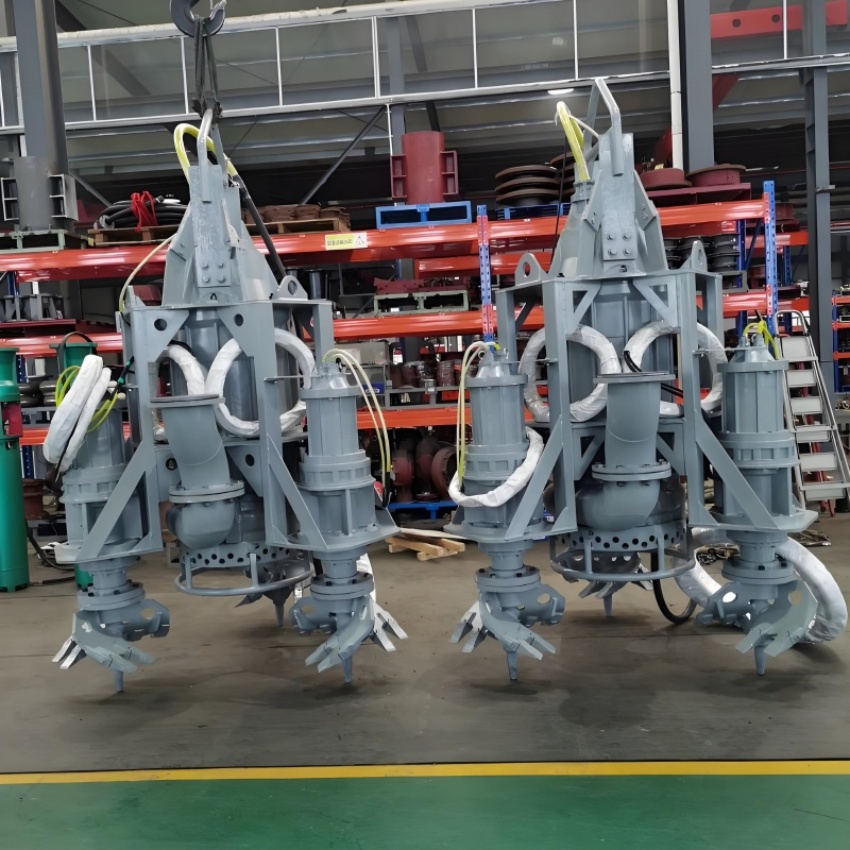
For mining operators, dredging contractors, and environmental engineers working across island nations like the Maldives, the challenge of moving abrasive slurries efficiently demands solutions that combine power, portability, and resilience. The 37KW ZJQ submersible sand pump represents a technological leap in this space—a fully submersible unit integrating a heavy-duty pump and agitator to handle sand, tailings, and sludge at concentrations traditional pumps cannot match. Recent exports to the Maldives demonstrate how advanced dredging technology can overcome island logistics constraints while cutting operational costs by 40-60% compared to horizontal pump systems. This guide unpacks the engineering, export protocols, and real-world performance of these pumps for global buyers.
1.Core Technology: How the ZJQ Submersible Sand Pump Works
1.1Dual-Impeller Design: The Heart of High-Concentration Handling
Unlike conventional pumps, the ZJQ series integrates two critical components:
Main Impeller: Generates up to 600 m³/h flow rates and 120m head pressures to transport slurries over long distances .
Bottom Agitator: Fluidizes compacted seabed materials (e.g., sand, clay, or ore tailings) into turbulent suspensions, enabling slurry densities up to 60% solids by weight .
This eliminates auxiliary jets or pre-mixing tanks—reducing setup complexity and energy costs.
1.2 Robust Construction for Abrasive Environments
Materials: Overflow components use Cr26 high-chromium alloy (hardness: 58-62 HRC), providing 2–10× longer service life than standard cast iron in silica-sand applications .
Sealing System: Multi-layered mechanical seals with pressure-equalizing oil chambers prevent water ingress even at 50m submersion depths .
Motor Protections: Built-in sensors monitor overheating, water intrusion, and bearing temperature, enabling continuous operation in temperatures ≤60°C (140°C for high-temp models) .
1.3 Critical Performance Parameters
Detailed explanation of core performance parameters
① Power range (Power Rating)
Standard model: 37KW (main model)
Full range coverage: 3KW–315KW (supporting small-scale dredging to large-scale mining scenarios)
② Flow rate (Flow Rate)
Working range: 25–600 m³/h
Peak efficiency: 37KW model reaches 300–350 m³/h (when the medium density is ≤1.8g/cm³)
③ Head performance (Head)
Vertical transportation: 10–120 meters
Horizontal extension: 1 meter head ≈ 10–15 meters horizontal distance (depending on the viscosity of the medium)
④ Flow particle size (Max. Particle Size)
Non-clogging design: can pass 13–45mm solid particles (equivalent to the size of a golf ball)
Special working conditions: customized version can handle ≤80mm gravel (requires ceramic lining reinforcement)
⑤ Medium concentration (Solids Concentration)
Conventional transportation:
Ash slurry: up to 45% solid content (weight ratio)
Ore sand tailings: up to 60% solid content (weight ratio)
Technical breakthrough: Bottom stirring impeller achieves >70% concentration short-distance transportation (working condition verification required)
⑥ Electrical compatibility (Voltage)
Standard configuration: 380V/50Hz (Chinese and European standard markets)
Global adaptation: supports 230V/415V/480V/1140V customization (50/60Hz automatic switching)


2.Packaging for Ocean Transport: Compliance & Protection
2.1 Step-by-Step Export Packaging Protocol
International shipping demands rigorous packaging to prevent corrosion, impact damage, or customs rejection:
Wood Treatment: All timber crates undergo ISPM-15 heat/chemical fumigation to eliminate pests, with certificates included .
Moisture Barrier: Pumps are sealed in aluminum foil bags with silica gel desiccants (humidity <5%) before being mounted in crates .
Impact Protection: Custom-cut EPE foam and honeycomb paperboard cushion critical components (e.g., impellers, seals) .
Marking: Crates display handling symbols (e.g., center of gravity, rain protection), dimensions (L×W×H), net/gross weight (kg), and itemized contents .
2.2 Containerization Best Practices
Flexitank Compatibility: For pumps pre-lubricated with hydraulic oil, UN-certified Flexitanks isolate fluids from metal parts .
Load Distribution: Use dunnage bags or inflatable air cushions to immobilize 1-ton pumps within containers .
Corrosion Prevention: VCI (Vapor Corrosion Inhibitor) powder is added for tropical maritime routes .
3.Navigating International Shipping: From Factory to Maldives
3.1 Documentation and Customs Clearance
Commercial Invoice: Declares value (USD 19,000–29,600 per unit) and harmonized system (HS) code 841370 for centrifugal pumps .
Bill of Lading: Serves as title transfer document—typically “clean on board” for (L/C) payments .
Maldives-Specific Requirements: GST declaration form, import license (for construction equipment), and original fumigation certificate .
3.2 Logistics Timeline & Costs (China → Maldives)
Port Selection: Shanghai/Ningbo → Malé (transit via Colombo/Singapore)
Lead Time:
Production: 5–7 days (standard 37KW units)
Inland transport: 2 days to Shanghai port
Ocean freight: 14–18 days
Freight Costs: ~USD 2,800/FCL (40’HQ container fits 4–6 pumps + accessories) .
4.Case Study: Maldives Coral Sand Extraction Project
4.1 Client Profile & Challenges
A Maldivian contractor struggled with diesel-powered horizontal pumps requiring:
– Frequent relocation across coral atolls
– Daily manual agitation of settled sand
– 3+ hours/day maintenance due to seal/shaft failures
4.2 Solution: ZJQ 37KW Pump System Deployment
Configuration: Two 37KW pumps with matching control cabinets, 100m HDPE discharge pipes (DN150), and inflatable floats .
Installation: Suspended from pontoons via quick-release cables (depth: 5–15m) .
Agitator Advantage: Pre-fluidized coral sand (density: 1.8 g/cm³), achieving 55% solids concentration without vacuum pumps .
4.3 Operational Results
Output: 300 m³/h sand slurry pumped 500m to processing barges
Downtime Reduction: <5% vs. 25–30% with previous system
ROI: Payback in 4 months via fuel/maintenance savings


5.Why Choose Submersible Over Horizontal Pumps?
Mobility: 37KW unit weighs 550–1,000 kg—easily floated or lifted vs. fixed horizontal pumps .
Energy Efficiency: Direct suction eliminates priming losses (saving 15–20% power) .
Noise/Emissions: Submerged operation limits noise to <75 dB and requires no diesel gensets .
Adaptability: Custom voltage (230V–1140V) and materials (stainless steel/ceramic liners) available for seawater use .
6.Conclusion: Engineering for Island Logistics
The 37KW ZJQ submersible sand pump redefines slurry handling in remote marine environments. By integrating agitation, high-density pumping, and rugged construction into a single submersible unit, it eliminates infrastructure barriers that once made projects across the Maldives or Papua New Guinea economically unviable. As demonstrated in recent deployments, the synergy of purpose-built engineering (e.g., Cr26 alloy impellers, bottom agitators) and logistics-compliant packaging ensures these pumps land operational—even after 20 days at sea. For dredging operators eyeing efficiency gains, this technology delivers not just sand, but sustainable competitive advantage.
Explore our ZJQ pump technical dossier for custom specifications sheets and export packaging guidelines.
Authored by
Tai’an OCEAN Pump Co., Ltd
Alina.Liu
Email: Oceanpump15@tsbeng.com
WhatsApp: +86 17354610320


